English – Writing
English at Holbrook
Writing at Holbrook
INTENT
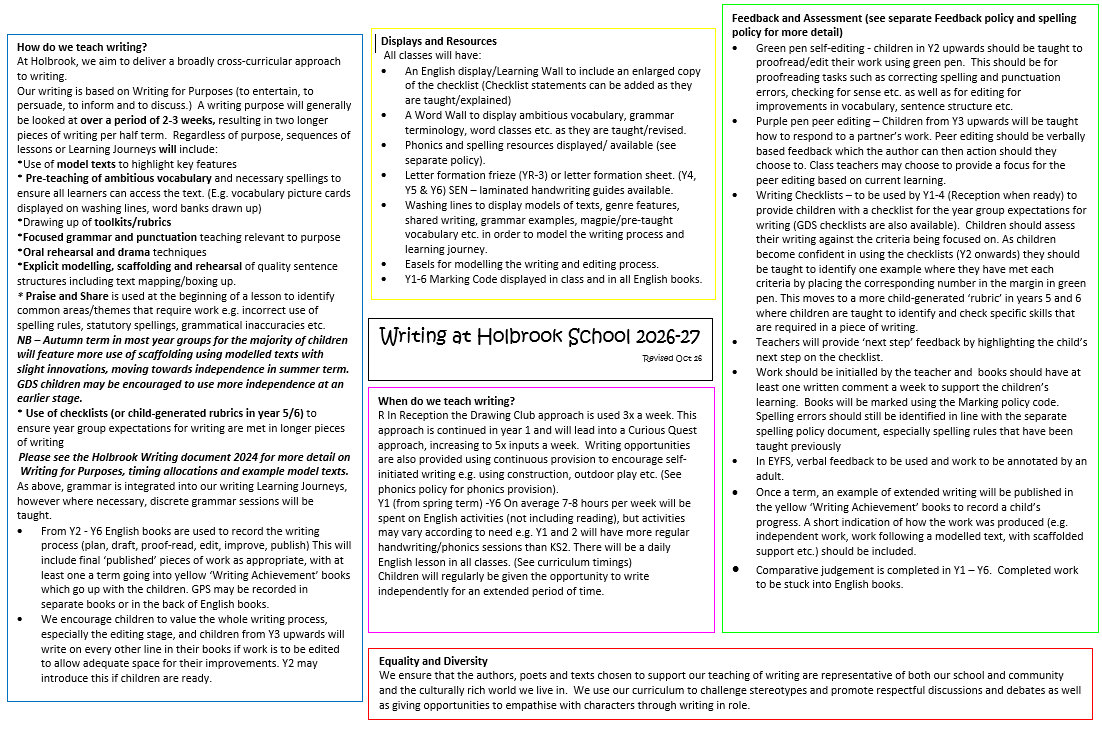
At Holbrook Primary School, we want every child to become a confident and effective writer. We teach children to communicate their ideas clearly for different purposes and audiences, while developing a love of language, stories and writing.
IMPLEMENTATION
What we aim for
We want children to:
- Write confidently for a range of purposes, including to entertain, inform, persuade and discuss.
- Develop secure spelling, grammar, punctuation and handwriting skills.
- Use interesting and appropriate vocabulary to communicate their ideas.
- Organise their writing clearly and make choices with the reader in mind.
- Develop independence when planning, writing, editing and improving their work.
- Take pride in the quality and presentation of their writing.
How we teach writing
Writing begins in the Early Years, where children have many opportunities to develop their language, mark-making and early writing skills through play and everyday experiences.
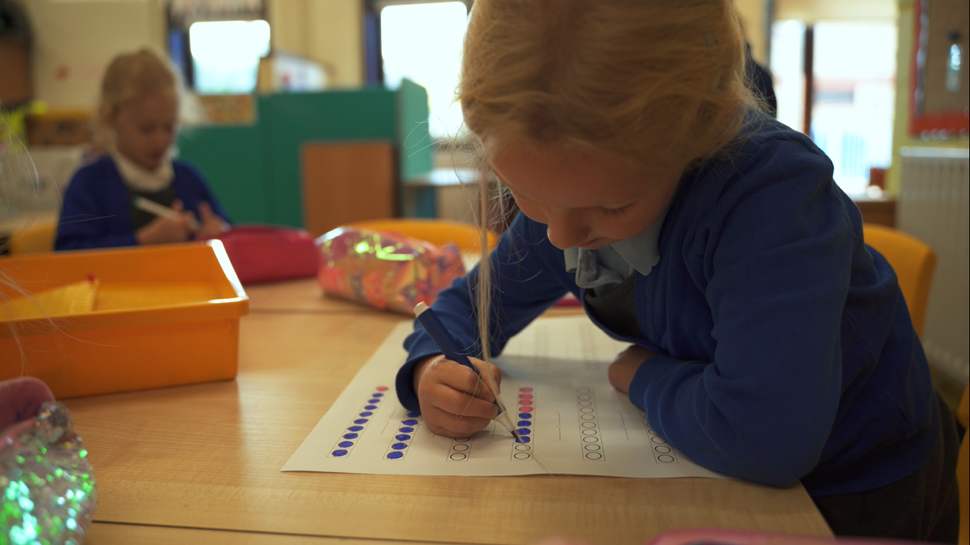
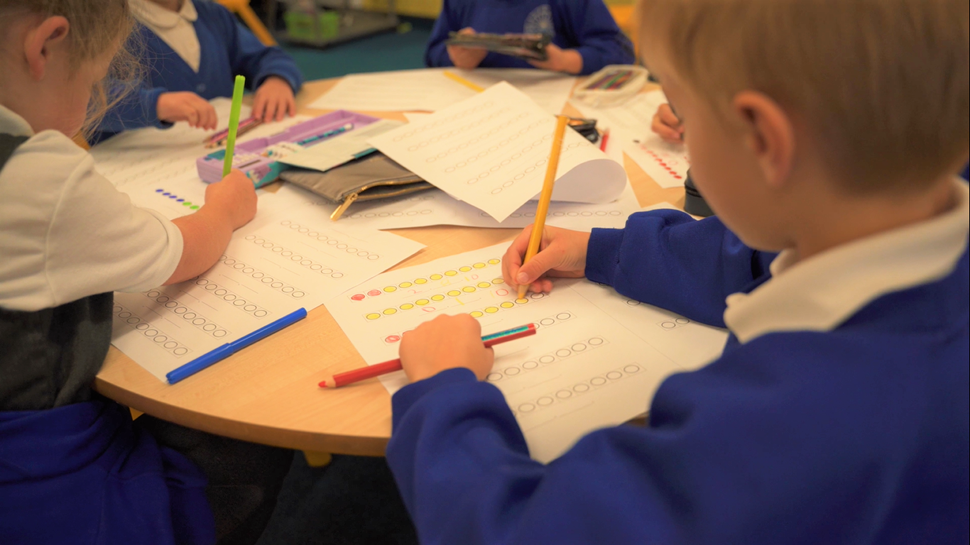
In Reception, Drawing Club supports children's language, vocabulary, imagination and early writing. Children explore stories and ideas through talk, drawing and writing, building confidence in communicating their ideas.
We also use the Curious Quests approach in Year 1 to provide engaging experiences that encourage children to ask questions, explore ideas and develop the vocabulary and knowledge they need to become successful writers.
Across the school, writing skills are taught progressively, building on what children already know. Children explore high-quality books, authors and poets that inspire their own writing and develop their vocabulary, imagination and understanding of the world.
Writing units are carefully planned so that children understand the purpose and audience for their writing. Teachers model writing and explicitly teach vocabulary, sentence structure, grammar and the features of different types of writing. Children have opportunities to talk about, rehearse and practise their ideas before writing independently.
Children learn that good writing develops through a process. They plan, draft, edit and improve their work, learning to make thoughtful choices about vocabulary, grammar and presentation.
Teachers regularly check children's writing and use this information to identify areas for development, address misconceptions and plan appropriate next steps. Children who need additional support are given targeted help to develop their skills and confidence.
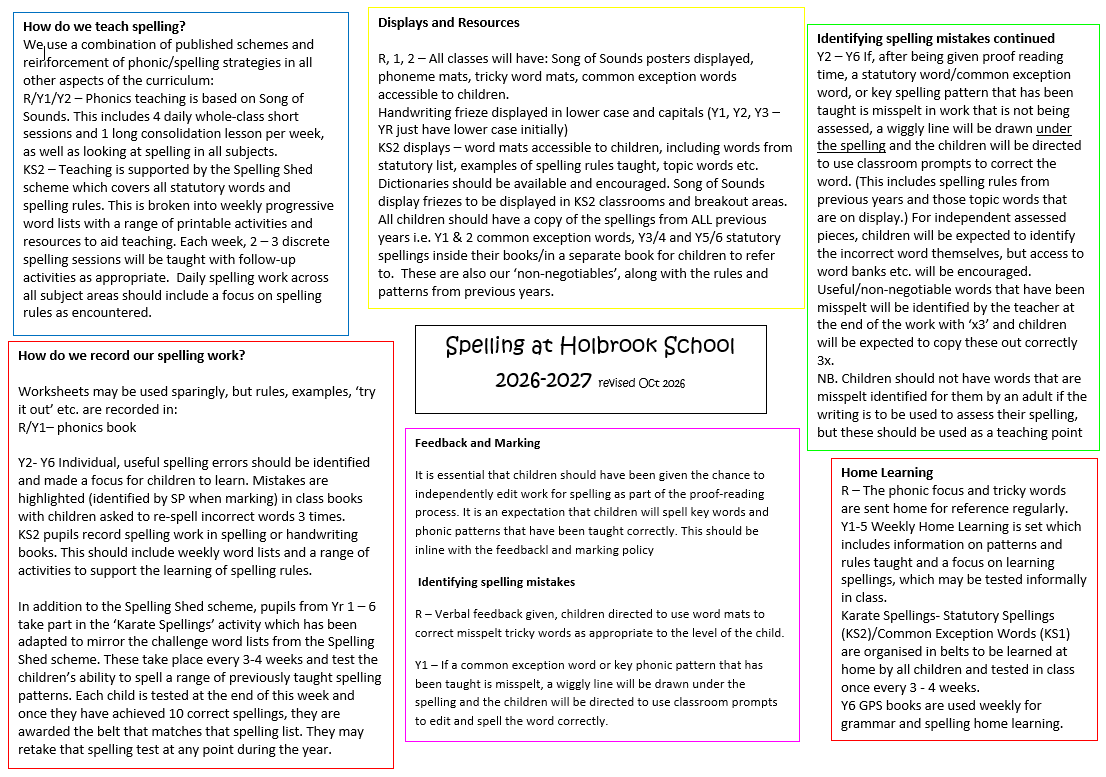
Spelling is taught through phonics (Song of Sounds R, Year 1 and Year 2) and Spelling Shed planning, alongside opportunities to investigate and practise words encountered across the curriculum.
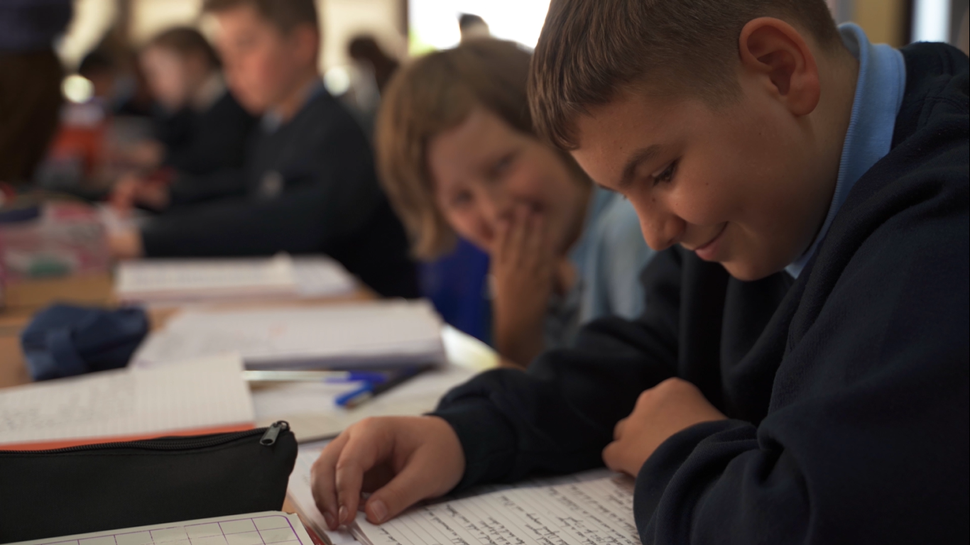
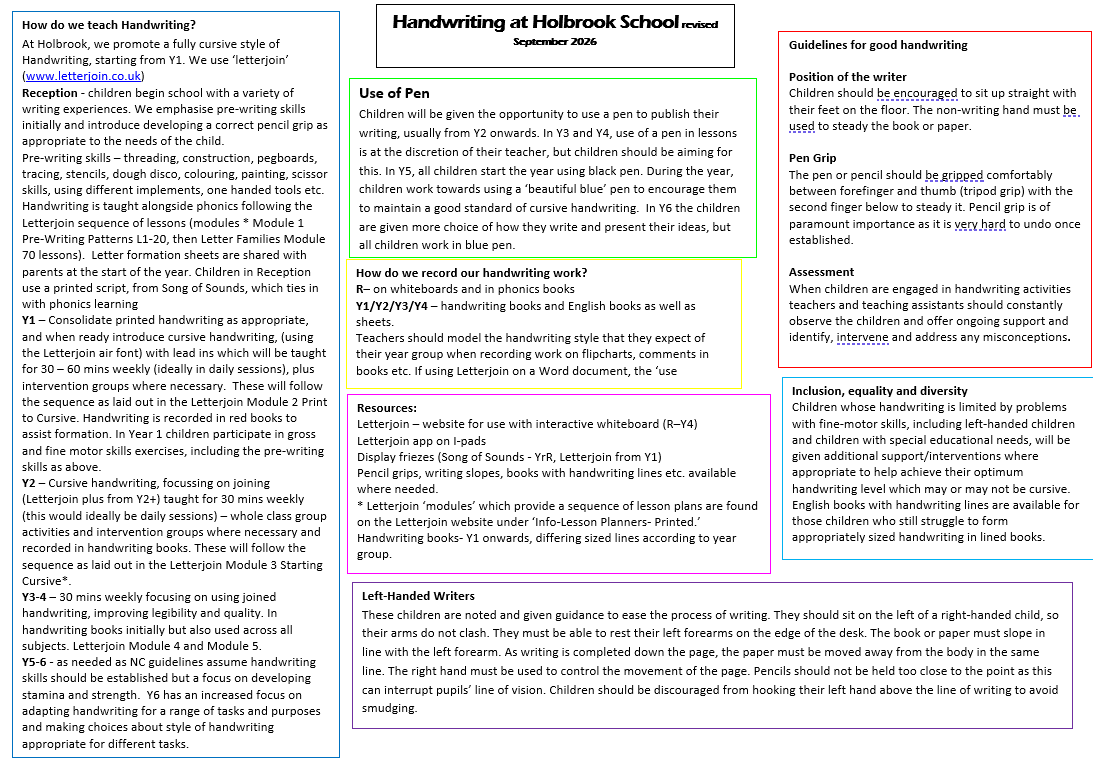
Handwriting is taught from Year 1 using a consistent cursive style. Children are encouraged to develop neat, legible handwriting and take pride in the presentation of their work across all subjects.
IMPACT
Children become increasingly confident and independent writers as they move through the school. They can adapt their writing for different purposes and audiences and make increasingly thoughtful choices about vocabulary, sentence structure and presentation.
Children understand how to improve their writing and take pride in the finished product. They use their writing skills across the curriculum and are well prepared for the next stage of their education.
Writing progression
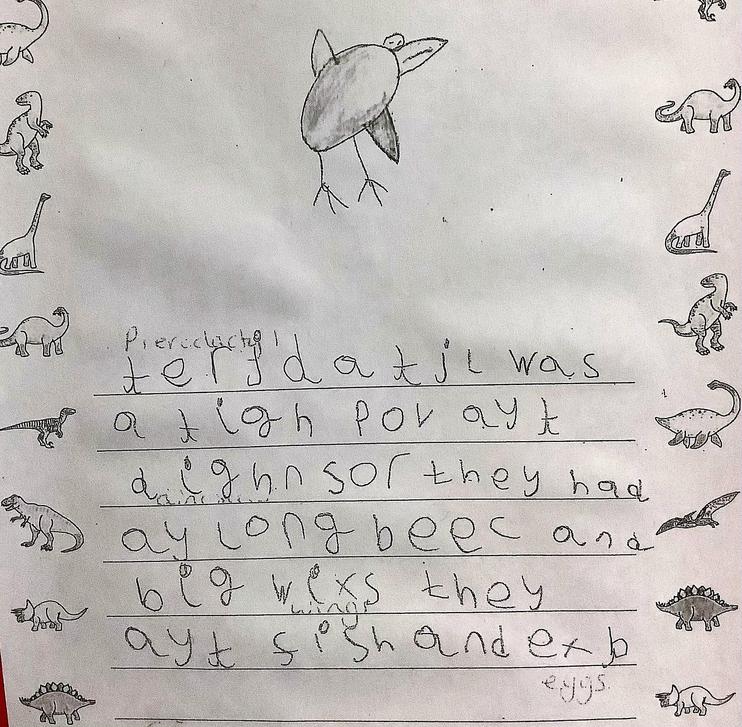 Reception - spelling words by identifying sounds and writing simple phrases
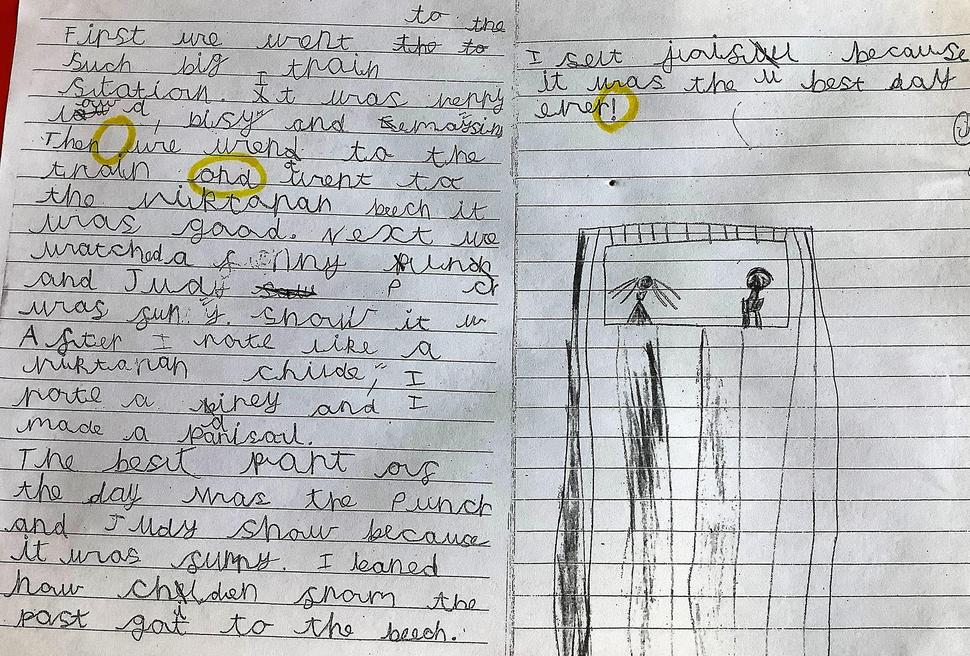 Year 1 - using capitals, joining words and clauses and beginning to punctuate
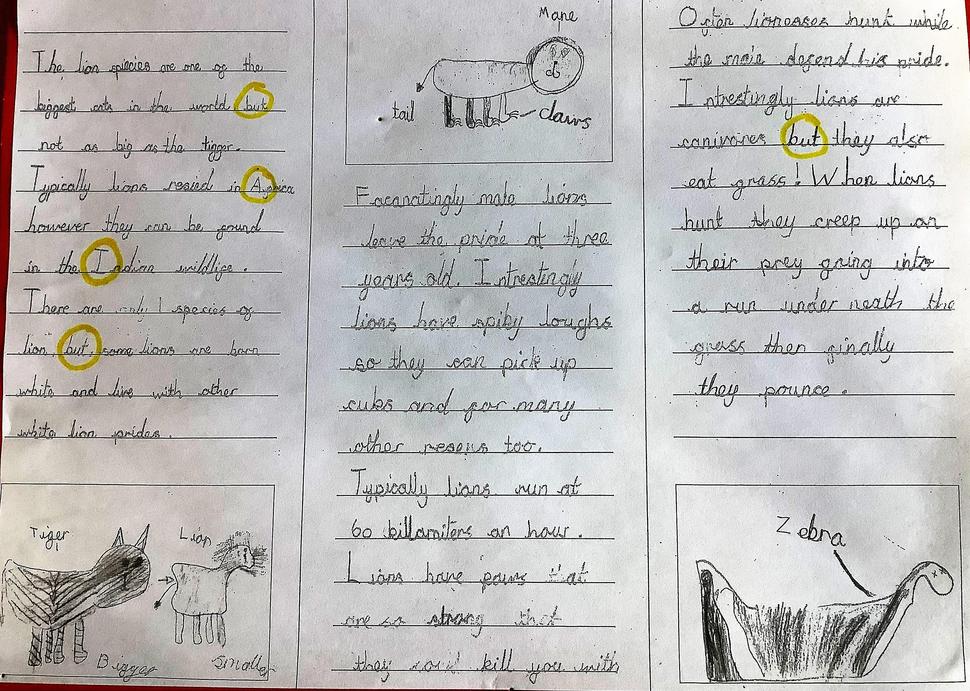
Year 2 - use simple subordination, past and present tenses and sentences of different form
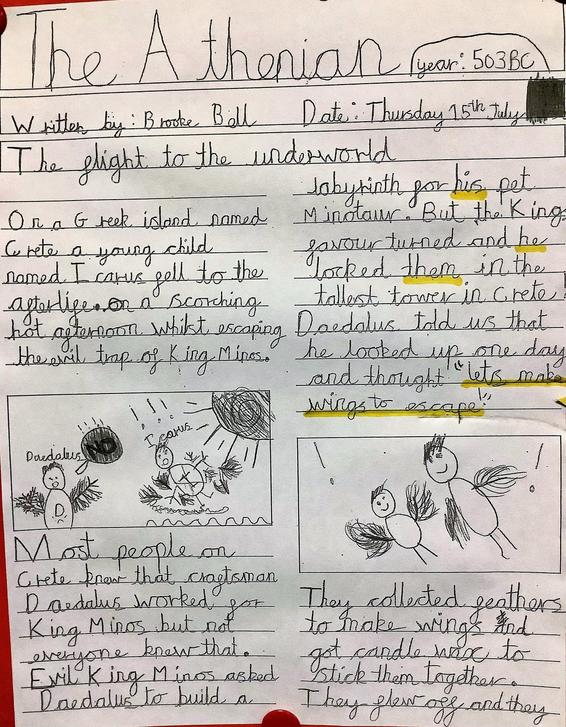
Year 3 - use nouns and pronouns, speech punctuation and conjunctions
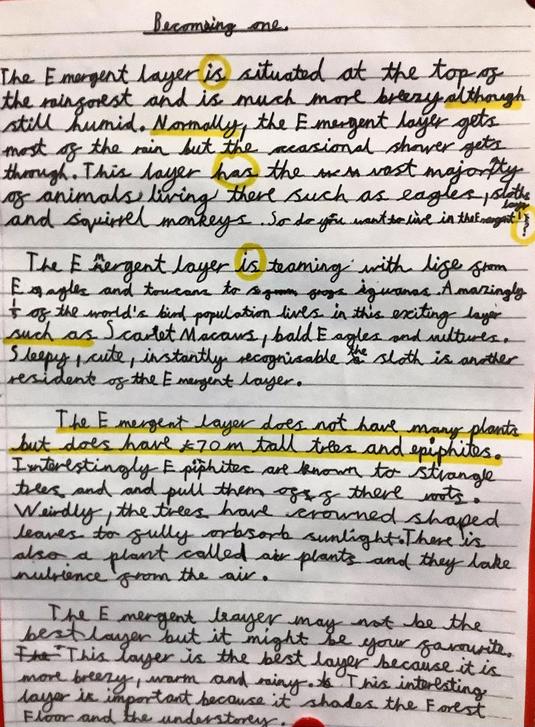
Year 4 - extend a range of sentences with more than 1 clause and include fronted adverbial
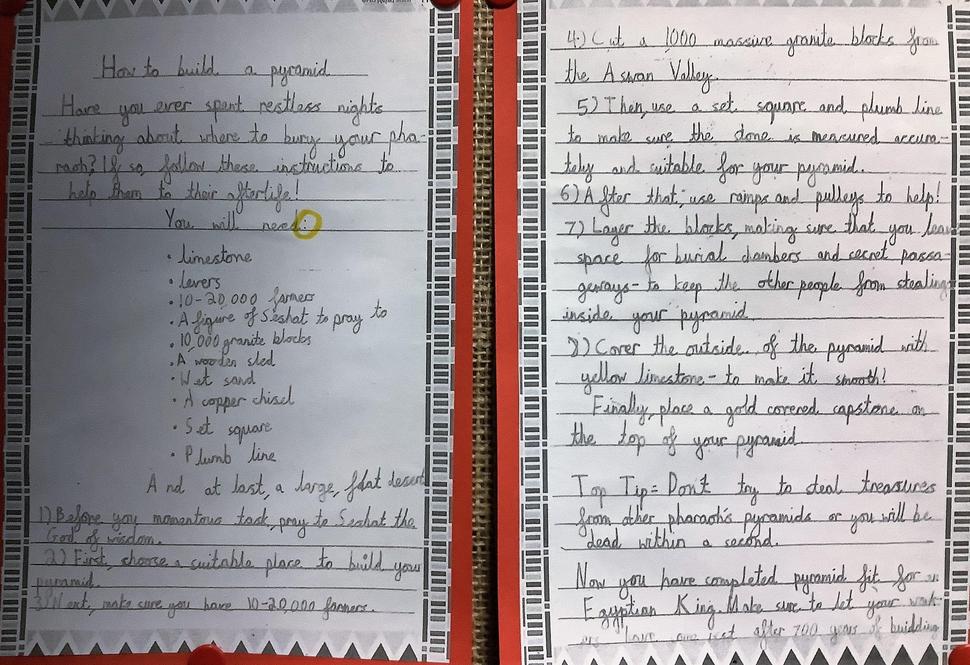
Year 5 - use noun phrases, brackets colons and the perfect form
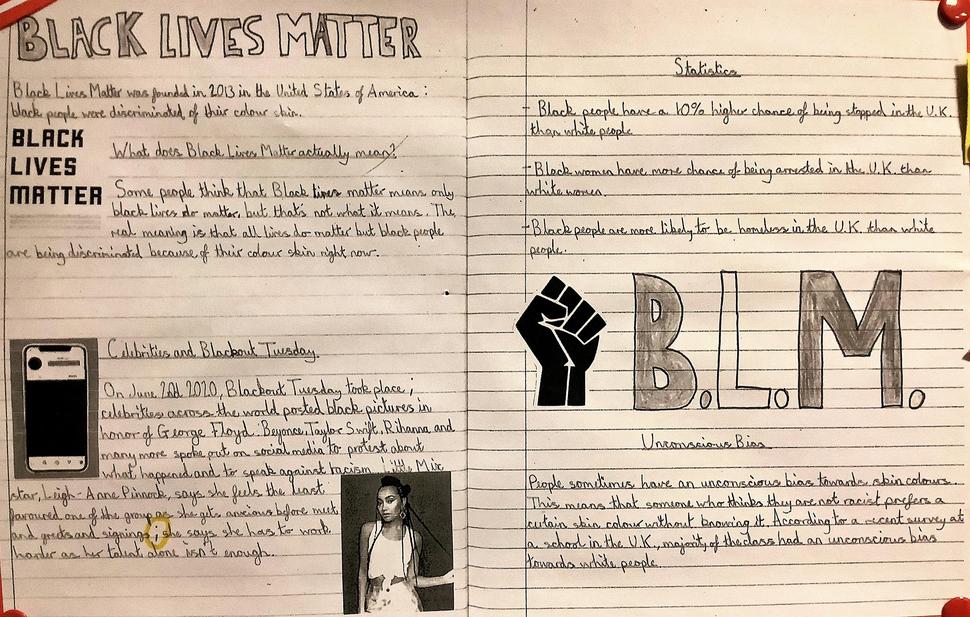
Year 6 - passive verbs for effect, punctuation for independent clauses, use relative clauses